From Skiffs to Steamers: How Early Harbour Crossings Shaped Sydney’s Waterways
Sep 29
The Wild Waterway That Built Early Sydney
Before a bridge spanned the harbour, Port Jackson was both Sydney”s greatest advantage and its most stubborn divider. The deep water carried produce, supplies and coastal ships into the young settlement, while the branching coves offered natural access to places that roads could not yet reach efficiently. At the same time, the harbour separated Sydney Town from communities developing along the northern shore. A short distance across the water could represent a difficult, expensive and weather-dependent journey overland.
For early residents, crossing the harbour was not a simple matter of checking a timetable and walking to a wharf. Boats were hired individually, fares varied, and rough conditions could turn a routine passage into a genuinely uncomfortable experience. The transport history of the colony, explored in detail by the Dictionary of Sydney, shows how geography, population growth, limited roads and changing technology pushed Sydney towards a public-transport city. The move from small rowing boats to dependable steam ferries did more than improve convenience. It fixed the pattern of daily movement that still shapes Sydney”s waterfront.
Watermen, Wherries, and White Knuckles
In the earliest decades, watermen and their wherries provided the practical answer to a problem that the settlement”s roads could not solve. These small, narrow rowing boats operated around Sydney Cove and the approaches near Dawes Point, carrying passengers, messages, goods and occasionally livestock between landing places. The service was personal rather than systematised. A passenger located a boatman, negotiated a fare and trusted the craft and its crew to manage the crossing.
That arrangement suited a small settlement, but it became increasingly strained as Sydney expanded. Independent boatmen worked in a harbour affected by wind, swell, tide and sudden changes in visibility. A calm morning could give way to a difficult afternoon, particularly in exposed stretches of water. Passengers also faced inconsistent pricing. When demand was high, or when a crossing involved an inconvenient landing point, fares could become costly by the standards of colonial wages.
The North Shore presented a particular challenge. Sydney Town and the northern settlements were close as the crow flies, yet the harbour made their connection dependent on boats, favourable conditions and suitable landing places. There was no reliable bridge, and overland alternatives were slow, indirect and often uncomfortable. That meant the watermen were not merely casual boat operators. They were an essential part of the colony”s communications network, even when their service remained unpredictable.
- Departures depended on finding an available boatman rather than following a public timetable.
- Wind, tide and harbour swell could affect both crossing time and passenger comfort.
- Fare disputes were more likely when pricing was negotiated privately.
- Landing arrangements were basic compared with the purpose-built wharves that came later.
Colonial waterfronts elsewhere faced similar questions about access, landing rights and the relationship between private operators and public needs. Historical archaeological research into early infrastructure, including this study of maritime transport corridors, helps place Sydney”s early watermen within a broader pattern. Wherever settlements grew around navigable water, small craft often came first, followed by pressure for regulation, safer facilities and more predictable services.
When Steam Conquered the Swell
Steam changed the character of harbour travel during the nineteenth century. Paddle-driven vessels could carry more passengers than a wherry and maintain progress without relying on a crew”s rowing strength. Their arrival did not instantly make every trip simple, but it introduced a level of regularity that independent boatmen could not match. Operators could plan services around working hours, market activity and the growing movement of residents between shorelines.
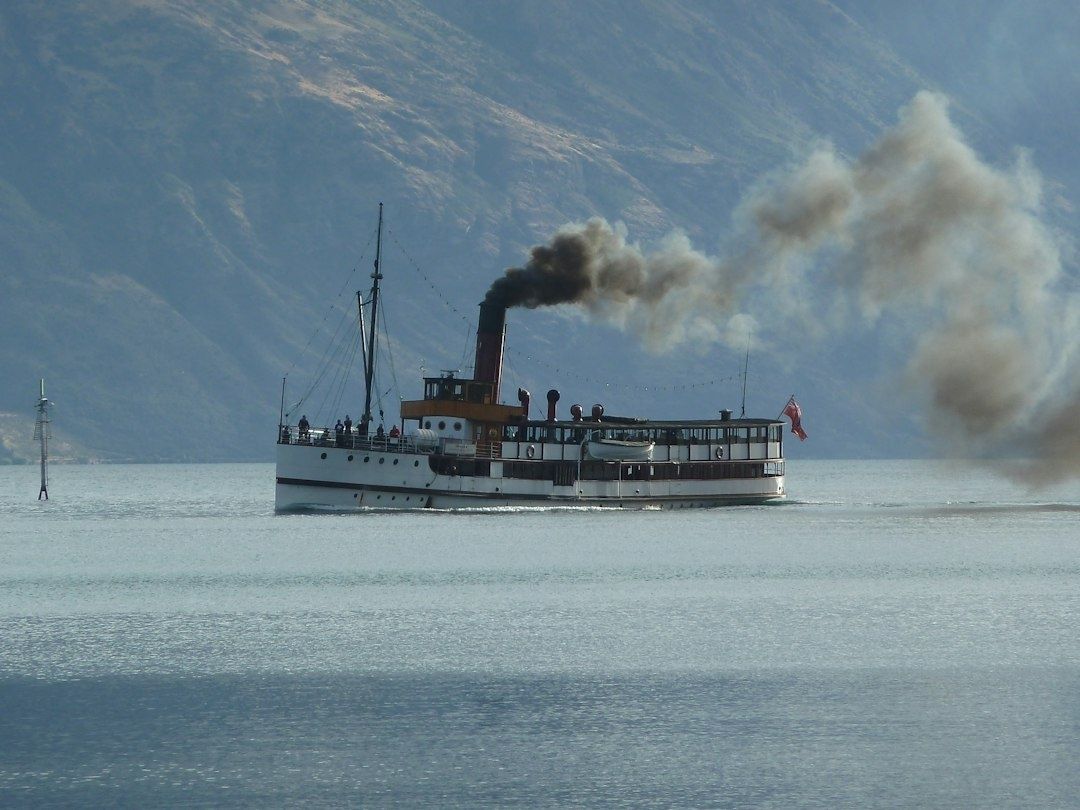
As Sydney”s population and economy expanded, ferry transport became increasingly suited to corporate organisation. Companies could invest in vessels, wharves, maintenance and crews, creating a service that looked less like an ad hoc water taxi and more like public transport. The distinction mattered. A commuter needed to know not only that a boat existed, but also where it would leave, how much capacity it offered and whether the service could be relied upon through ordinary working conditions.
The next major step was the development of double-ended ferries. These vessels could operate in either direction without turning around, an important advantage at narrow or busy wharves. The K-class ferries became the best-known expression of this design. Built for Sydney conditions, they combined passenger capacity with practical manoeuvrability and became strongly associated with the harbour”s daily rhythm. The surviving Kanangra, built as a steam ferry in 1912, later carried more than 40 million passengers and is now being restored by the Sydney Heritage Fleet at Rozelle Bay.
| Transport stage | What changed for passengers |
|---|---|
| Rowed wherries | Flexible but dependent on individual boatmen, weather and negotiated fares |
| Paddle steamers | Greater capacity and less reliance on rowing strength |
| Organised ferry companies | More structured routes, crews, wharves and operating expectations |
| Double-ended steam ferries | Faster turnaround at terminals and practical operation in confined waters |
The expansion of organised passenger routes created the operating footprint remembered in the history of Sydney Ferries. Steam did not erase the harbour”s difficulties, but it made crossing it a normal part of urban life. Residents could live on one side of the water and work, trade or conduct business on the other. That daily habit helped establish the dispersed, water-oriented geography that remains distinctive to Sydney.
Safety Overhauls and Harbour Navigation Standards
A busy harbour inevitably exposed weaknesses in early operating practices. As more vessels shared the water, the consequences of poor visibility, crowded approaches, mechanical failure and confused manoeuvring became more serious. Collisions and near misses in the nineteenth and early twentieth centuries contributed to demands for better navigation standards. The resulting reforms were not a single switch from unsafe to safe travel. They emerged through repeated adjustments to vessel design, crew practice, harbour management and shore infrastructure.
Formal right-of-way expectations became essential as steam ferries, cargo vessels, sailing ships and smaller craft used the same approaches. Wharf design also evolved. Stronger structures, clearer berthing arrangements and more practical access points reduced the risks associated with loading and unloading passengers. Dedicated maintenance facilities allowed operators to inspect engines, hulls, paddle gear, propellers and safety equipment rather than relying on improvised waterfront repairs.
- Operators needed clearer rules for meeting, crossing and overtaking in confined harbour waters.
- Wharves required stronger construction and safer arrangements for boarding passengers.
- Ferries needed planned inspection and repair rather than occasional emergency attention.
- Crew training and operational discipline became increasingly important as traffic intensified.
Balmain became an important centre for ferry maintenance and harbour industry, while Cockatoo Island developed a major shipbuilding and dockyard role. These places supported the less visible side of commuting. A ferry service depended not only on the vessel seen at the wharf, but also on fitters, engineers, dock workers, painters, boilermakers and crews preparing boats for the next run. Cockatoo Island”s industrial history, including its long dockyard era, illustrates how Sydney”s passenger network rested on substantial infrastructure beyond the public wharves.
The heritage significance of these facilities lies in their connection between technology and routine. A polished ferry at Circular Quay represented a much larger system of workshops, slips, stores and skilled labour. Balmain”s maintenance associations and Cockatoo Island”s industrial remains therefore help explain how Sydney”s ferries became dependable enough to carry workers, schoolchildren, visitors and freight across the harbour year after year.
Tracing Historic Ferry Paths on the Modern Harbour
Many present-day harbour journeys still follow the logic established by nineteenth-century ferry transport. Circular Quay remains the clearest example of a waterfront interchange shaped by the relationship between the city centre and the water. Balmain and McMahons Point also retain strong connections to the older commuter geography, even though modern vessels, wharves and passenger arrangements differ from those of the steam era. Looking across the water from these locations makes the historical point immediately clear: the harbour was never empty space between suburbs. It was a transport corridor.
For a practical heritage outing, begin by checking the current operator information before leaving, particularly on weekends, public holidays and during major events. Allow time to walk from the surrounding streets to the wharf, and wear shoes suitable for ramps, steps and uneven waterfront surfaces. The restoration tour of Kanangra at the Sydney Heritage Fleet Shipyard in Rozelle Bay offers a closer look at a surviving K-class ferry, its interior and the workshop where volunteers are preserving it. Visitors should note that access involves ramps, steep stairs, wharves and uneven surfaces, and the vessel is currently inaccessible to wheelchair users and walkers.
- Use a current official timetable or transport app before setting out, as services and wharf arrangements can change.
- Check weather and wind conditions, especially if travelling with children, mobility equipment or bulky luggage.
- Allow extra time at busy ferry interchanges rather than planning a tight connection.
- Combine a ferry ride with a waterfront walk around Circular Quay, Balmain or McMahons Point.
- Look for heritage events and operating vessels, including activities associated with the annual Transport Heritage Expo, held from 3 to 5 October 2026.
The best heritage experience is often a combination of ordinary travel and careful observation. Watch how the vessel approaches a wharf, notice the need for controlled manoeuvring and compare today”s passenger facilities with photographs of earlier timber and steam ferries. Where access is available, heritage vessels and surviving slipway or dockyard features can reveal the practical work behind the harbour”s romantic image.
Step Aboard Living Maritime History
Sydney”s early harbour crossings began as precarious, negotiated trips in small rowing boats. Steam introduced capacity and consistency, while organised companies, double-ended ferries, safer wharves and dedicated maintenance yards turned water travel into a dependable urban service. Those changes permanently shaped where people lived, worked and travelled. The later construction of the Harbour Bridge connected the shores physically, but ferry transport had already created the habits and routes that made the harbour a central part of Sydney”s identity.
To experience that history, take a current public ferry from a major harbour interchange, choose a route that allows time for a waterfront walk, and check the operator”s information before departure. For deeper insight, seek out a heritage vessel visit, a shipyard tour or a transport event, taking note of access requirements and local conditions. A crossing on Port Jackson remains more than a scenic trip. It is a direct encounter with the transport network that helped build modern Sydney, one wharf, engine and swell at a time.