Beneath the Wake: The Secret Marine Life Thriving in Sydney Harbour
Sep 22
Past the Opera House Sails Lies a Hidden Marine Haven
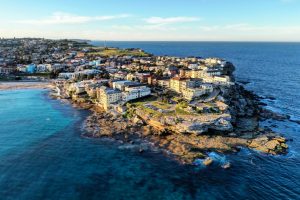
From the deck of a small launch, Sydney Harbour can appear entirely devoted to movement: ferries pushing through the morning chop, yachts trimming sail between headlands, and the skyline catching the first hard glitter of the day. Yet the most important activity is often hidden below the wake. Between the wharves, rocky foreshores and sheltered coves, an urban estuary supports fish, seagrass, seabirds, marine mammals and small communities of threatened species.
That contrast is especially clear on a run from Manly”s coves towards the harbour”s engineered edges. The same waterway carrying heavy commercial and recreational traffic also provides breeding habitat for the only mainland New South Wales colony of Little Penguins, shelter for endangered White”s Seahorses and surfaces that can be redesigned to support marine life. For boaters, appreciating that hidden habitat is not simply an environmental extra. It means understanding where to slow down, how to manage wake, when to keep clear of wildlife and why careful anchoring matters.
The Enigmatic Little Penguins of Manly Cove
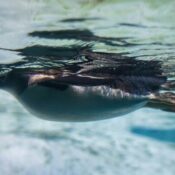
In a sheltered cove around North Harbour lives Sydney”s only breeding colony of Little Penguins on the New South Wales mainland. The colony has been known since the 1940s and 1950s, and its survival is remarkable given the surrounding roads, homes, ferries, boats and visitors. The birds forage throughout Sydney Harbour and along the coast, then return to shore around sunset. Their breeding season generally runs from May to February, making evening activity particularly important for anyone approaching the shoreline by boat.
These penguins are small, secretive and vulnerable. The population was listed as endangered in 2002, and the habitat is protected as an Area of Outstanding Biodiversity Value. Recent monitoring underlines the colony”s fragile scale: 15 breeding pairs and 30 fledglings were recorded in 2025-26, compared with 15 pairs and 29 fledglings in 2024-25. Boat strikes, pollution, disturbance, domestic animals, disease, changing climate conditions and reduced food availability can all add pressure to a population with little margin for loss.
Conservation therefore combines habitat work with close observation. Annual nest monitoring, predator control, vegetation restoration, volunteer wardens and boating restrictions help protect the colony during its most sensitive months. Authorities have also introduced a targeted H5 avian influenza vaccination trial for vulnerable native birds, including Manly”s Little Penguins. Vaccination involves two doses three to four weeks apart, followed by controlled observation, but it is only one part of a broader response involving surveillance, biosecurity and preparedness.
- Keep well clear of the protected shoreline, especially during the July to February breeding period.
- Reduce speed and wake near secluded coves, rocky edges and areas where birds may be entering or leaving the water.
- Never approach, handle or collect a penguin, and report sick or dead wildlife to the relevant authorities.
- Keep dogs and cats away from penguin habitat, and secure rubbish that could reach the harbour.
Seahorse Hotels and the Renaissance of White’s Seahorse
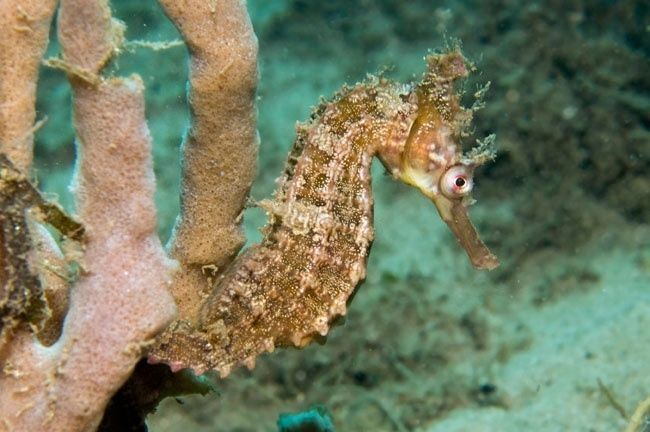
Far below the level of a passing ferry”s windows, White”s Seahorse, Hippocampus whitei, depends on structure. This endangered species is endemic to Australia”s east coast, but the seagrass meadows and complex surfaces that once offered anchorage and shelter have declined. Posidonia australis meadows are themselves recognised as an endangered ecological community in the Hawkesbury-Manning Bioregion, so the challenge is not merely to increase seahorse numbers. The habitat must recover alongside the animal.
The Greener Pastures project addresses both needs through artificial habitat units known as Seahorse Hotels. Built from biodegradable materials and metal that eventually rusts away, the structures resemble discarded fish traps and provide a framework for seahorses to grip. Once installed near netted baths, jetties or harbour pilings, they become colonised by sponges, soft corals and seaweed, gradually turning a simple frame into a living refuge.
Captive-bred animals from programs involving SEA LIFE Sydney Aquarium and the Sydney Institute of Marine Science have been released onto these structures, while Operation Posidonia restoration teams replant storm-dislodged seagrass shoots collected with community assistance. A peer-reviewed study in Frontiers in Marine Science followed 90 marked juveniles for up to two years. After one year, 20 percent of released seahorses were still detected on Seahorse Hotels, compared with 2 percent on a swimming net. Nine captive-bred seahorses reproduced in the wild, including two observed mating with wild animals.
The results are encouraging, but they do not make artificial habitat a substitute for protecting natural seagrass. The project”s value lies in combining temporary shelter, conservation stocking and habitat restoration while scientists continue monitoring survival and reproduction. A detailed account of these breeding milestones appears in research on Sydney”s seahorse hotels.
- Artificial hotels provide grip, shelter and a surface for marine growth.
- Captive-bred juveniles can be released while natural habitat is being restored.
- Replanted seagrass offers longer-term ecological value than an isolated artificial structure.
- Ongoing underwater surveys are essential because release numbers alone do not prove recovery.
Living Seawalls and the Greening of Blue Infrastructure
Much of Sydney Harbour”s foreshore has been modified for transport, property, defence and access. More than half of the natural foreshore is understood to have been hardened with vertical sandstone seawalls, which are effective at holding back water but offer far less variety than a natural rocky edge. A smooth, vertical surface has fewer pools, overhangs and crevices for small fish, invertebrates, algae and juvenile marine species.
Living Seawalls use 3D-printed modular tiles and related eco-engineering features to introduce that missing complexity. The tiles mimic rock pools, crevices and other forms found on natural shorelines. They do not remove the seawall”s practical role, but add places where organisms can attach, shelter and feed. In combination with replanted seagrass and breeding programs for White”s Seahorses, such projects show how existing maritime infrastructure can become part of a restoration network.
| Artificial surface | Eco-engineering modification | Potential ecological benefit |
|---|---|---|
| Smooth vertical seawall | Textured modular tiles | More attachment points for algae, sponges and sessile invertebrates |
| Flat harbour piling | Crevices and sheltered habitat units | Refuge for small fish and seahorses |
| Degraded seagrass edge | Replanted storm-dislodged shoots | Recovery of nursery and anchorage habitat |
| Highly exposed hard edge | Rock-pool-like recesses | Greater variety of moisture, shade and water-flow conditions |
Skipper Guidelines for Sharing the Sound with Harbour Wildlife
Good wildlife handling begins before the throttle is opened. Keep a proper lookout ahead, to either side and behind the vessel, particularly near coves, seagrass shallows and shoreline roosting areas. Animals may surface briefly or move unpredictably, while a low afternoon sun, ferry wash and glare can make detection difficult. If a penguin, seal, dolphin, turtle or other protected animal appears nearby, reduce speed, keep the vessel under control and allow it a clear escape route.
Wake deserves the same attention as speed. A wake that feels modest from the helm can rebound against a rocky shore, disturb a netted bath or erode a soft bank. Repeated wash can also disturb shallow seagrass beds, where sediment movement reduces light and damages fragile plants. Sound matters as well, particularly in confined water. Engines should be slowed or placed at idle when animals are at risk, and unnecessary circling should be avoided.
Anchoring requires particular care. Propellers and anchor chains can scar Posidonia australis meadows, breaking leaves and disturbing the sediment that holds the plants in place. Before dropping the anchor, identify the bottom where possible and choose clear sand or another approved area rather than shallow vegetated water. Inspecting and cleaning gear also helps prevent aquatic weeds and marine pests from spreading between waterways. For the current rules on distances, speed, wake and protected wildlife, recreational boaters should consult the NSW guidance on protecting marine life.
- Check local conditions, exclusion areas and wildlife notices before departure.
- Maintain a continuous lookout, especially around sheltered coves and shallow vegetated water.
- Slow to idle or stop safely when an animal surfaces close to the vessel.
- Keep clear of penguin habitat and observe any seasonal restrictions around critical areas.
- Reduce wash where waves could affect shorelines, small craft, swimmers or nesting habitat.
- Anchor only in suitable clear-bottom areas, never directly on seagrass.
- Inspect, drain and clean the vessel, tender, anchor and fishing equipment before moving to another waterway.
Chart a Gentle Course Across Our Living Waterway
Sydney Harbour”s wild identity is not separate from its working identity. Ferries, water taxis, yachts, charter boats and shoreline facilities all share the same estuarine system that supports penguins, seahorses, seagrass and countless less visible species. Commercial operators and recreational skippers therefore have a practical role in conservation every time they choose a safer speed, trim their wake or leave a sensitive bottom undisturbed.
Before the next harbour outing, check the weather and local notices, identify likely wildlife habitat, allow extra time for a slower scenic route and brief every passenger on responsible conduct. Keep binoculars ready rather than approaching for a closer look, carry rubbish back to shore and treat a quiet engine as part of good seamanship. The most rewarding harbour passage is not necessarily the fastest one. It is the one that leaves the waterway calm enough for the life beneath the wake to continue its work.